Living in Tokyo for a Month: Renting, Costs and Daily Life
We rented a house in Setagaya and lived in Tokyo for months. How to find a short-term rental, what it costs in 2026, getting around, food, internet and everyday tips.
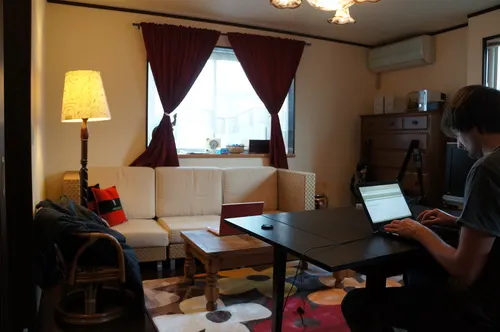
Tokyo is a city of more than 35 million people in its wider metropolitan area, yet daily life runs so smoothly that it quickly feels like home. We lived in Tokyo for several months, first in a rented town house in Setagaya, and came back again later. This guide covers what we learned about renting, getting around and living in Tokyo month by month, updated with current prices.
Quick answer: For a month in Tokyo, book a furnished monthly apartment ("monthly mansion") or a licensed short-term rental in a residential area on a good train line, such as Setagaya, Nakano, Suginami or Koto. Get a Suica or PASMO card, eat lunch sets and konbini meals, and budget most of your money for rent: a regular one-bedroom costs roughly ¥105,000 a month outside the centre and ¥198,000 in the centre (June 2026 figures), and furnished short stays cost more.
Where we lived: a town house in Setagaya
Our first Tokyo home was a new two-storey town house in Setagaya, a large residential ward in the west of the city. We rented it for three months and paid a little over 2,000 euros a month back in 2013.
Setagaya works like a small town of its own: shopping streets with everything you need, many restaurants, sports centres, quiet lanes of family houses and almost no high-rise blocks. Our station, Kyodo on the Odakyu Line, was about 20 minutes from Shinjuku. For a long stay, that mix of calm streets and fast trains is exactly what we look for.
Other good bases for a month: Shimokitazawa (also in Setagaya, with cafés and vintage shops; see our Shimokitazawa guide), Nakano and Koenji on the Chuo Line, and Kiyosumi-Shirakawa in the east.
How to rent in Tokyo for a month
A normal Japanese lease is made for residents: two-year contracts, a guarantor, key money and agency fees. As a visitor staying one to three months, you have three realistic options:
- Monthly apartments ("monthly mansions"). Furnished flats rented by the week or month, with utilities and internet often included. This is the easiest option for one to three months.
- Licensed short-term rentals on the big booking platforms. Since Japan's private lodging law of 2018, listings must be registered, and many homes may only be rented for up to 180 nights a year, so choice is smaller than it used to be. Check the listing shows a registration or licence number.
- Share houses. Cheapest, with a private room and shared kitchen, and popular with long-stay foreigners.
Room sizes are often given in tatami mats (jō). One mat is roughly 1.6 m², so a 6-mat room is about 10 m². Floor plans use codes like 1K (one room plus kitchen) or 1LDK (one bedroom plus living, dining and kitchen).
What a Tokyo home is like
Tokyo was largely rebuilt after the 1923 earthquake and the bombing of 1945, so most homes are modern, compact and designed with earthquakes in mind. Things that surprised us:
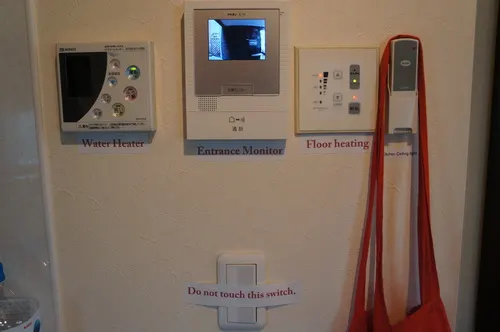
- Control panels everywhere. Our walls had panels for the water heater, the entrance intercom and floor heating. Ask your host to explain them on day one.
- Small earthquakes. We felt several small tremors in our first weeks. Learn where the nearest evacuation area is; your host or ward office can tell you.
- Rubbish rules. Waste is separated strictly (burnable, non-burnable, plastics, cans and bottles) and collected on set days. Public bins are rare, so you carry rubbish home.
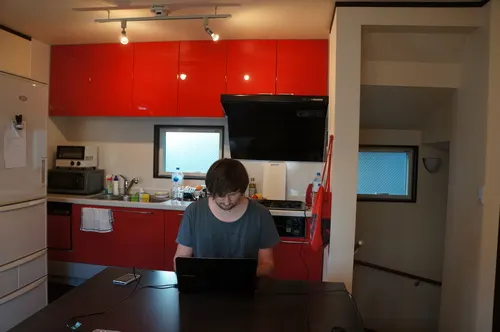
- Compact kitchens with a dishwasher drawer, a grill drawer under the hob and a sink with a fine mesh drain.
Getting around Tokyo
- Get a Suica or PASMO IC card (or add one to your phone) and tap in and out on every train, subway and bus. Fares are charged by distance.
- If you commute on one route every day, a commuter pass (teiki) on that route can save money.
- Trains stop running around midnight, so plan late evenings or budget for a taxi.
- Cycling is a great way to explore residential neighbourhoods; many rentals and share houses lend bicycles.
Food and groceries
Eating in Tokyo can be surprisingly cheap if you eat like the locals:
- Lunch sets (teishoku) are the best value of the day.
- Konbini (7-Eleven, Lawson, FamilyMart) are perfect for breakfast and quick meals.
- Supermarkets discount bento and prepared food in the evening.
- Our favourite budget chains are in our guide to cheap food in Japan, and Kappabashi is the place to buy kitchen tools if your rental lacks them (Kappabashi Street guide).
Internet and phone
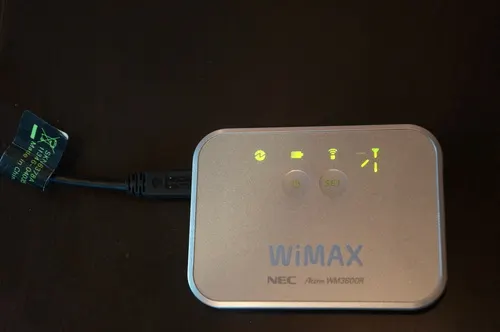
We used a pocket WiMAX router to work from home and on the go. Today the simplest options are a data eSIM set up before you arrive, or a rented pocket Wi-Fi collected at the airport. Many monthly apartments include fast fibre internet, so ask before you book.
Tokyo cost of living for a month: what to budget
| Cost | What to expect (2026) |
|---|---|
| Regular one-bedroom (long lease) | About ¥105,000 a month outside the centre, about ¥198,000 in the centre |
| Furnished monthly apartment | More than a regular lease, as it includes furniture and usually utilities and internet; compare several providers |
| Transport | Pay as you go on Suica/PASMO, or a commuter pass if you travel one route daily |
| Food | Lunch sets, konbini and supermarkets keep it low; dinners out add up quickly |
| Phone and internet | Data eSIM or pocket Wi-Fi; often included in monthly apartments |
The big lesson from our time in Tokyo: rent is where the money goes, and location on a good train line saves you time every single day. Everything else can be as cheap or as expensive as you like.
Visas
Many nationalities can visit Japan visa-free for up to 90 days as tourists. Japan has also offered a digital nomad visa since 2024 for remote workers from eligible countries with a high income, for stays of up to six months. Rules change, so check the Japanese Ministry of Foreign Affairs or your local Japanese embassy before you plan a long stay.
More from Tokyo: Things to do in Harajuku · Akihabara guide · Cherry blossom spots · Renting a car in Japan
Sources checked: Expatica – cost of living in Tokyo (Numbeo data, June 2026), GTN Magazine – Tokyo rent by area. Rents vary widely by area and building; use these as a guide only.
About the authors
Dasza — Writer and photographer behind PTraveler. Polish-born, raised in Germany, happiest renting a flat in a new city for a month.
Tomek — Project manager, fixer and tour leader. Plans the routes, finds the free days and tests every street-food stall.