Kappabashi Kitchen Street, Tokyo: Fake Food, Knives and a Food Model Workshop
Tokyo's kitchen town: where to buy Japanese knives, tableware and realistic plastic food models in Kappabashi, how to get there, and how to make your own fake food at a workshop.
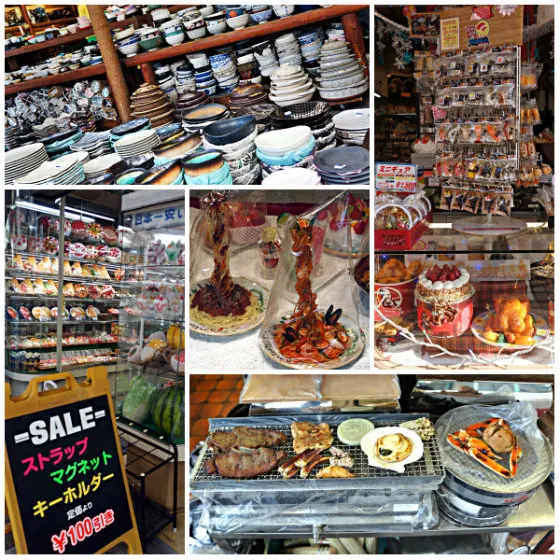
Every neighbourhood in Tokyo has its speciality, and Kappabashi's is everything to do with food except the food itself. This street between Ueno and Asakusa is where Tokyo's chefs and restaurant owners buy their knives, pots, tableware, lanterns and the incredibly realistic fake food that sits in Japanese restaurant windows.
We came back to Kappabashi several times, to shop for chopsticks and bowls, to stare at plastic sushi that looks better than the real thing and, best of all, to make our own fake food at a workshop.
Quick answer: Kappabashi Dori is about 10 minutes' walk from Tawaramachi Station (Ginza Line) or 15 minutes from Asakusa. Look for the giant chef's head on the Niimi building. Shops open roughly 9/10 am to 5/6 pm, and many close on Sundays. For food model workshops, Ganso Shokuhin Sample-ya offers wax tempura-and-lettuce sessions for about ¥3,000 (book ahead).
What to buy in Kappabashi
The main street, Kappabashi Dori, is about 800 metres long and lined with around 170 specialist shops:
- Japanese knives, from everyday kitchen knives to handmade chef's knives. Many knife shops engrave your name for free and can advise in English.
- Tableware: ceramic bowls, sake sets, tea cups, plates and lacquerware.
- Chopsticks, bento boxes and bamboo tools.
- Professional kitchen gear: pots, pans, takoyaki grills and noren curtains.
- Plastic food models (sampuru), the street's most famous product.
Prices are often lower than in department stores, since the shops sell to professionals.
Plastic food models (sampuru)
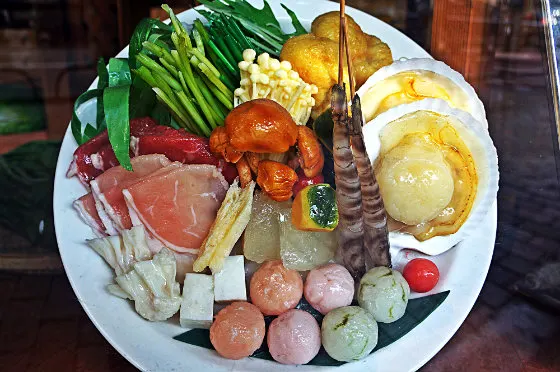
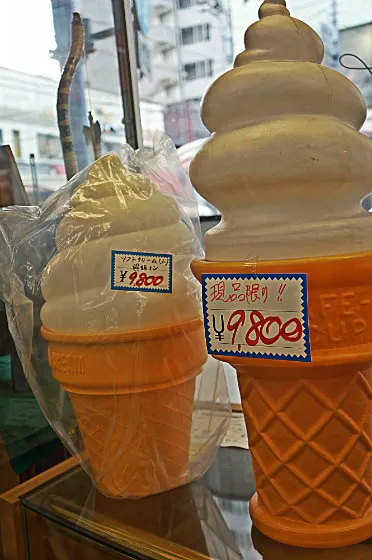
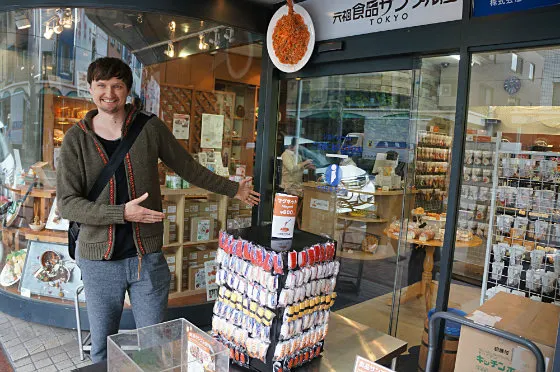
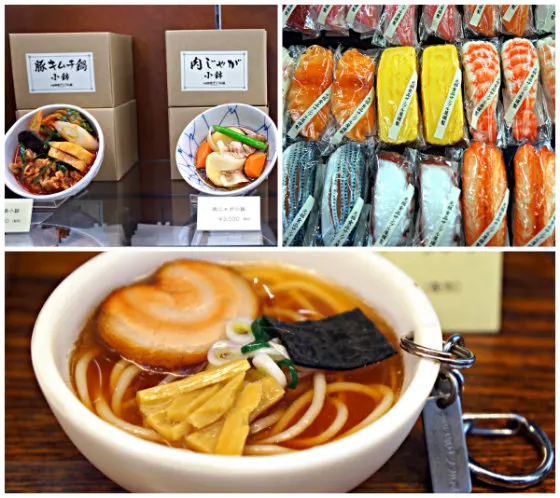
Sampuru comes from the English word "sample". These replicas, made from plastic or wax, show customers exactly what each dish looks like, and they are so realistic that you will want to eat them. In Kappabashi some shops feel like supermarkets of fake food: sushi, ramen, ice cream, shabu-shabu, whole lobsters.
Full-size models are expensive, but there are plenty of affordable souvenirs: sushi magnets, ramen key rings, phone straps and DIY kits.
Make your own fake food
The highlight of our visits was a food model workshop at Ganso Shokuhin Sample-ya, one of the original food sample makers, on Kappabashi Dori (3-7-6 Nishi-Asakusa).
We each made a head of lettuce and a piece of tempura from coloured wax and warm water. It looks easy until you try it: Dasza struggled with her pumpkin tempura while Tomek produced a perfect lettuce. The moment you cut the lettuce open and see the layers is pure magic.
Good to know: the workshop costs about ¥3,000 per person (2026), and the shop is open from 10 am to 5:30 pm. Instructions are mainly in Japanese, but it is easy to follow by watching. Book in advance. The shop also sells DIY food model kits, such as a bowl of soba or spaghetti, to make at home.
How to get to Kappabashi
- From Tawaramachi Station (Ginza Line): take exit 3, walk west along Asakusa-dori towards Ueno, and turn right at the second traffic light onto Kappabashi Dori.
- From Asakusa: about 15 minutes on foot, easy to combine with Senso-ji Temple.
- Landmark: the giant chef's head on top of the Niimi tableware building marks the southern end of the street.
Who is Kappa?
A kappa is a mischievous water creature from Japanese folklore, part reptile, part child, said to play tricks on people but to become a loyal friend if you treat it well. The merchants of Kappabashi adopted it as their mascot, and you will see golden kappa statues along the street.
Tips
- Visit on a weekday: many shops close on Sundays and public holidays.
- Bring cash for small shops, though most now take cards.
- Check customs rules before flying home with knives; pack them in checked luggage.
- Combine it with Senso-ji, Asakusa and Ueno Park in one day.
More Tokyo food: cheap eats in Japan.
Sources checked: Japan Web Magazine – food sample workshops in Tokyo & Osaka.
About the authors
Dasza — Writer and photographer behind PTraveler. Polish-born, raised in Germany, happiest renting a flat in a new city for a month.
Tomek — Project manager, fixer and tour leader. Plans the routes, finds the free days and tests every street-food stall.