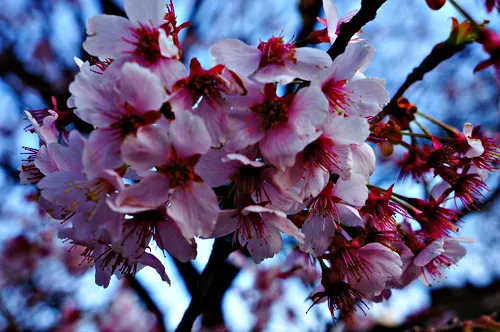
How to Do Hanami in Japan: A Step-by-Step Guide
How to enjoy hanami like a local: when cherry blossoms bloom, how to claim a picnic spot, what to bring and eat, and the etiquette rules for Japan's favourite spring tradition.
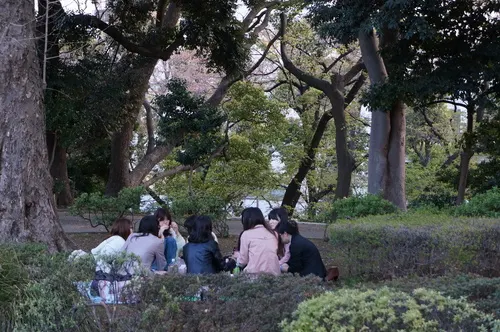
When the cherry trees bloom, all of Japan goes outside. Hanami literally means "flower viewing" (hana = flower, mi = to look), and for a few short weeks every spring, parks fill with blue picnic sheets, bento boxes, sake and friends sitting under clouds of pink and white blossoms.
We spent two cherry blossom seasons living in Tokyo and learned hanami the best way: from our Japanese friends, who taught us where to sit, what to eat and how not to embarrass ourselves.
Here is everything we learned, step by step, updated with the current rules in Tokyo's parks.
Quick answer: Follow the cherry blossom forecast, pick a park, arrive early to lay out a picnic sheet under a tree, bring bento and drinks from a convenience store or department store food hall, stay for the evening illuminations (yozakura), and take all your rubbish home. Check each park's rules: some, such as Shinjuku Gyoen, ban alcohol.
1. Follow the cherry blossom forecast
In spring, Japanese TV and weather sites publish the sakura zensen, the cherry blossom front, showing how blooming moves north through the country. Okinawa blooms as early as January or February, Tokyo and Kyoto usually from late March to early April, and Hokkaido in late April or May.
Full bloom (mankai) lasts only about a week, and a single rainy or windy day can bring the petals down, so stay flexible. In 2026, Tokyo's forecast had first bloom around 19 March and full bloom around 26 March.
2. Find your hanami spot
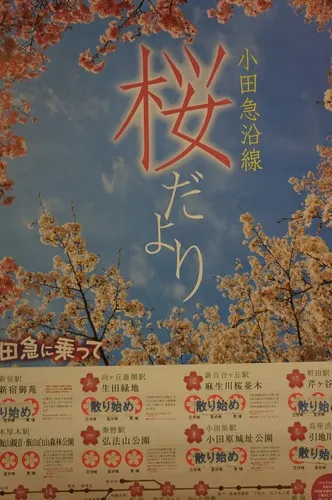
Every city has famous hanami parks, and they are packed at weekends. In Tokyo our favourites were Shinjuku Gyoen, Ueno Park, the Edogawabashi riverside and Aoyama Cemetery. See our list of the best cherry blossom spots in Tokyo.
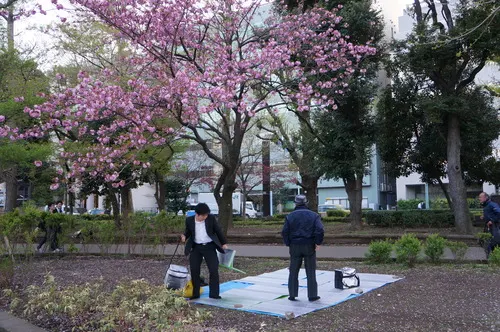
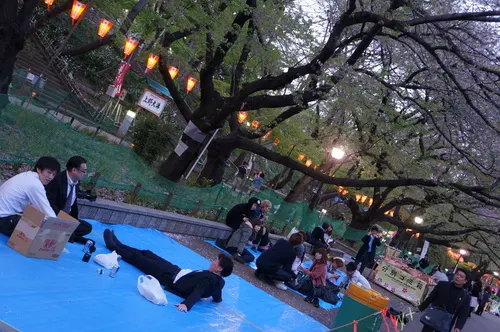
At the most popular parks, people reserve spots early in the morning by laying out a blue tarp; sometimes one unlucky colleague is sent to guard it all day. The best place is right under a tree.
3. Join in and meet people
Hanami is a social event. Companies, students, families and groups of friends all gather for picnics, and the atmosphere is relaxed and friendly. If you are on your own, simply walk under the trees and enjoy the scene; people often invite visitors to join them. Ueno Park is especially lively, with food stalls and lanterns.
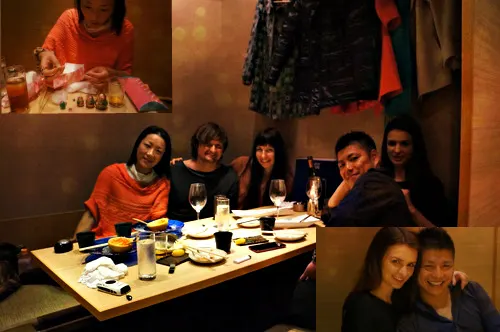
We had hanami picnics and dinners with our Japanese friend Saori and met people from all over the world doing the same.
4. Get your hanami equipment
- A picnic sheet: the classic blue waterproof tarp. Any 100-yen shop or Don Quijote sells them.
- A warm layer: spring evenings in Japan get chilly quickly.
- Wet wipes, bin bags and a small cushion.
- Leave the barbecue at home: grills and open fires are banned in most city parks.
5. Buy hanami food
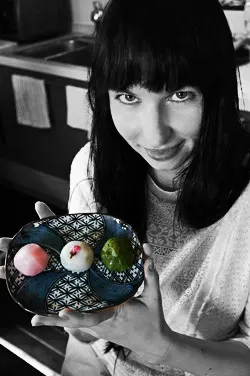
The easiest option is a convenience store (konbini) such as Lawson, FamilyMart or 7-Eleven, which all sell special sakura-season bento, snacks and pink sweets. For something more special, go to the food hall (depachika) in the basement of a department store such as Isetan in Shinjuku, where you will find beautiful seasonal bento and wagashi.
What to try:
- Hanami dango: three-coloured rice dumplings (pink, white and green) on a stick.
- Sakura mochi: pink rice cakes wrapped in a salted cherry leaf.
- Strawberry daifuku: soft rice cake filled with bean paste and a whole strawberry.
- Anything sakura-flavoured: from lattes to KitKats, everything turns pink in spring.
Food stalls (yatai) in the big parks sell grilled skewers, yakisoba, taiyaki and sakura sweets.
6. Drinks: check the rules
Sake, beer and sweet sakura drinks are part of hanami for many people, but rules differ by park. Shinjuku Gyoen strictly bans alcohol, and some parks restrict drinking or picnic areas during peak season. Always check the park's notices before you go.
7. Stay for yozakura
After dark, many parks and rivers light up the cherry trees with lanterns or spotlights. This night-time hanami, yozakura, is magical. The Meguro River, Chidorigafuchi Moat and Ueno Park are famous for it.
Hanami etiquette
- Don't touch, shake or climb the trees, and never break off branches.
- Don't spread your sheet over roots where signs ask you not to; the roots are delicate.
- Take all your rubbish home or use the designated bins. Bins are rare in Japan.
- Keep the noise reasonable, especially late in the evening.
- Don't reserve more space than you need, and don't leave a sheet unattended all day at parks that forbid it.
- Respect closing times and photography rules, especially in gardens.
Where to see cherry blossoms in Japan
Beyond Tokyo, the most famous spots include Kyoto's Philosopher's Path and Maruyama Park, Osaka Castle, Himeji Castle, Hirosaki Castle in the north and the thousands of trees on Mount Yoshino near Nara.
Read next: Best cherry blossom spots in Tokyo
Sources checked: Metropolis Japan – Tokyo hanami spots 2026, Shinjuku Gyoen (Ministry of the Environment).
About the authors
Dasza — Writer and photographer behind PTraveler. Polish-born, raised in Germany, happiest renting a flat in a new city for a month.
Tomek — Project manager, fixer and tour leader. Plans the routes, finds the free days and tests every street-food stall.