Sintra Day Trip From Lisbon: Which Palaces Are Worth It?
Pena, Quinta da Regaleira, Monserrate or the National Palace? How to plan a Sintra day trip from Lisbon in 2026, with ticket prices, the 434 bus and our honest favourites.
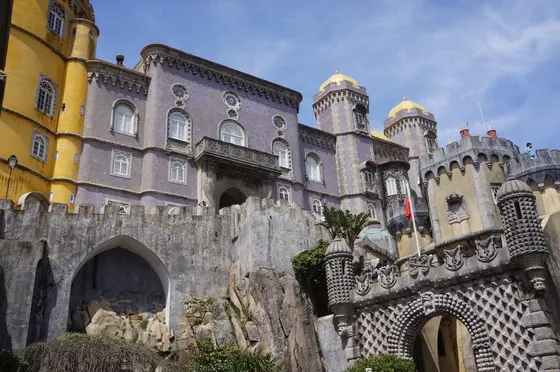
Sintra is the most magical day trip from Lisbon: a UNESCO-listed town in green hills, full of fairy-tale palaces built by kings, queens and eccentric millionaires. The problem is choosing. There are more palaces than you can see in one day, and each has its own ticket.
While we lived in Lisbon, we visited Sintra twice, once with Dasza's mum, and saw five palaces: Pena, Quinta da Regaleira, Monserrate, the National Palace of Sintra and the rococo palace of Queluz on the way.
Here is what each one is like, which ones we would choose for a single day, current ticket prices, and how to get there without the traffic headaches.
Quick answer: With one day in Sintra, visit Pena Palace (book a timed slot first, €20) and Quinta da Regaleira (€20), which are a 15-minute walk from the old town. If you have more time, add Monserrate (€12), our personal favourite. Take the train from Lisbon's Rossio station (about 40 minutes), then bus 434 up to Pena (€4.10). Private cars cannot drive up to Pena or the Moorish Castle.
Sintra palaces at a glance
| Palace | Adult ticket (2026) | Best for | Time needed |
|---|---|---|---|
| Pena Palace (park + palace) | €20 (park only €12) | The famous colourful castle, views | 2–3 hours |
| Quinta da Regaleira | €20 | Mystery, gardens, the Initiation Well | 1.5–2 hours |
| Monserrate (park + palace) | €12 | Gardens, Moorish-Indian interiors, fewer crowds | 1.5–2 hours |
| National Palace of Sintra | €13 | Tiles and history, right in town | 1 hour |
| Moorish Castle | €12 | Ramparts and views | 1 hour |
| Queluz National Palace | see official site | Rococo, a mini Versailles | 1–1.5 hours |
Buy directly from parquesdesintra.pt (Pena, Monserrate, National Palace, Moorish Castle, Queluz) and regaleira.pt. Resellers often add 20–40%.
Pena Palace: the fairy-tale castle
Pena looks like something Disney would build if Disney had a Portuguese king: candy-red and lemon-yellow towers, Moorish domes, turrets, a sea-monster gate and endless tiles, all on top of a hill with views across the Sintra mountains to the Atlantic.
It was built in the 19th century by King Ferdinand II, the "Artist King", and Queen Maria II around a 16th-century monastery, whose Manueline cloister you can still walk through. Inside, it is like stepping into the royal family's daily life a hundred years ago: bathrooms, bedrooms, early telephones, a dining room with psychedelic patterns and a ceiling that looks carved but is only painted.
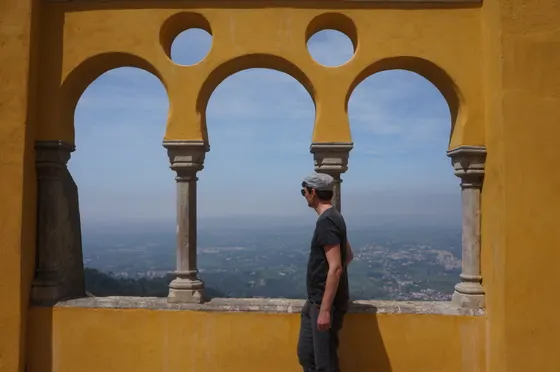
Tips for Pena:
- Book your palace time slot online first and plan the rest of the day around it. It is the only Sintra sight where timed entry really matters.
- From the park entrance it is still a steep 10–15 minute walk uphill to the palace, so plan for it in your time slot.
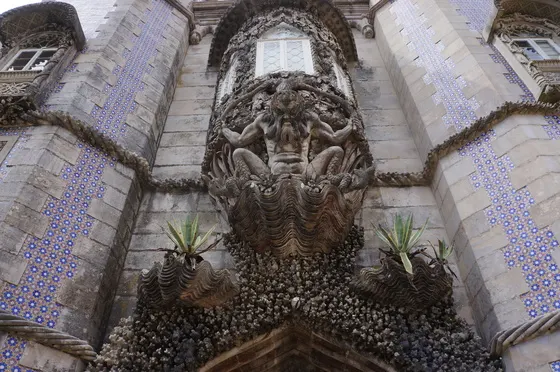
- Don't miss the Triton gate, half man, half fish, and the Queen's Terrace with its sundial cannon.
- Leave time for the park: lakes, exotic trees, the High Cross viewpoint and the Chalet of the Countess of Edla.
Quinta da Regaleira: Sintra's most mysterious estate
If Pena is a fairy tale, Quinta da Regaleira is a puzzle. Built between 1898 and 1912 for the millionaire António Augusto Carvalho Monteiro, nicknamed "Monteiro the Millionaire", and designed by the Italian architect Luigi Manini, it is full of symbols from alchemy, the Knights Templar and Freemasonry.
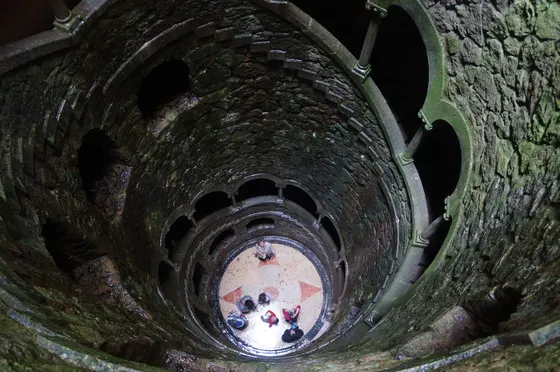
The highlight is the Initiation Well: not a well at all, but an upside-down tower with a spiral staircase sinking 27 metres into the ground, connected by damp tunnels to grottoes and waterfalls. The palace itself has lace-like Gothic stonework and a library with mirrors in the floor.
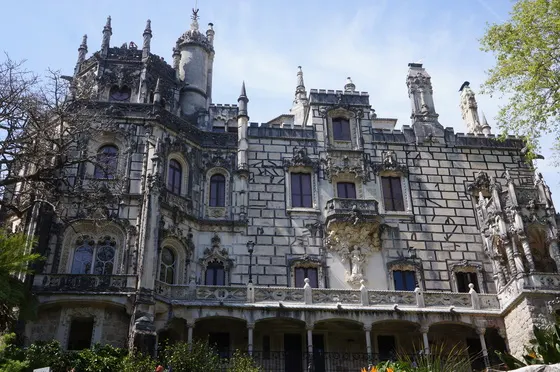
Tips for Regaleira: entry is by timed slot every 30 minutes from 10 am, so book ahead in high season. Wear shoes with grip and bring a torch (your phone works); the tunnels are dark and wet. It is a 10–15 minute walk from Sintra's old town.
Monserrate: our favourite
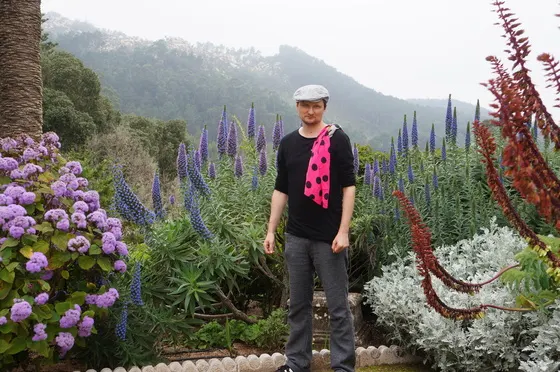
Monserrate was the last palace on our first Sintra day and, for us, the most original. In 1856 the English textile millionaire Sir Francis Cook turned it into a summer palace mixing Gothic, Indian and Moorish styles, with lace-like stucco, coloured dome windows and an Indian gate he brought back from his travels.
The gardens are a reason to come on their own: waterfalls, ruins, hidden paths and exotic plants from around the world. We spent ages getting lost on the paths with Dasza's mum. It is also much quieter than Pena or Regaleira.
Good to know: Monserrate is about 4 km west of the old town. Bus 435 runs there from Sintra station. Parts of the palace roof are under restoration into early 2027.

National Palace of Sintra: tiles and chimneys
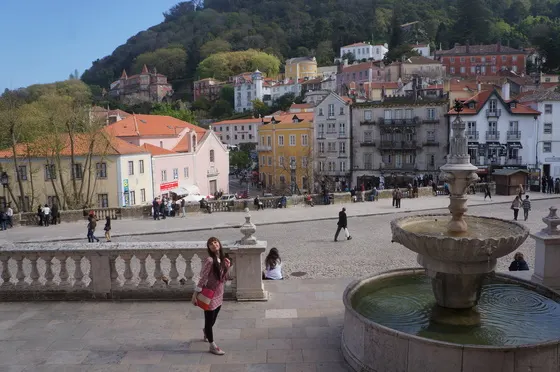
The National Palace sits right in the centre of town, recognisable by its two huge white conical chimneys. Its origins go back to the Moorish era, but most of what you see was built by King João I in the 15th century and King Manuel I in the 16th century, in a mix of Mudéjar and Manueline styles.
Inside, it is all about azulejos: whole rooms lined with colourful tiles, plus the giant kitchen under those famous chimneys. Compared with the light, airy palaces, it felt heavy and medieval to us, but the chapel and the tile rooms are beautiful, and it is easy to fit in if you have an hour spare.
Queluz: a mini Versailles on the way
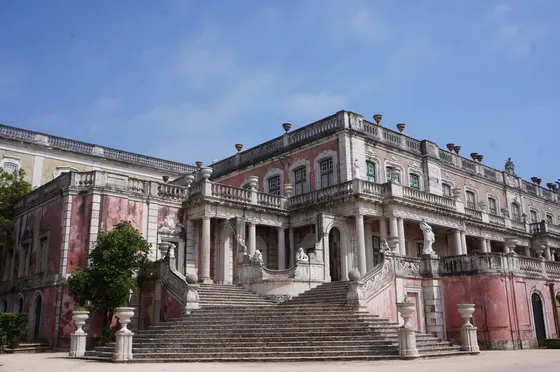
Queluz is not in Sintra but in a suburb about 10 km from Lisbon, on the same train line. This pink rococo palace was the summer residence of Queen Maria I and her husband (and uncle) Pedro III, with gilded halls, chandeliers, tiled canals and formal gardens full of fountains and sculptures. We stopped here on the way to Sintra by car. It is a good extra if you have two days, or if you want a palace with far fewer crowds.
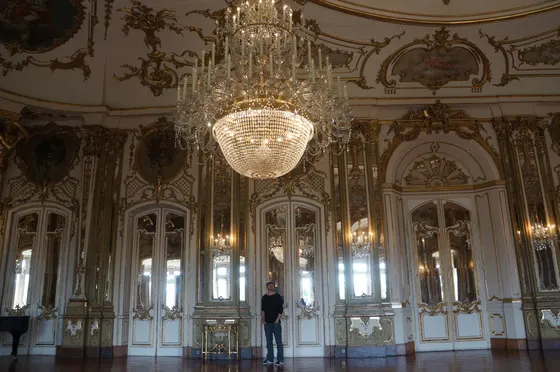
Our recommended one-day Sintra itinerary
- Early train from Rossio to Sintra (aim to arrive before 9:30).
- Bus 434 straight up to Pena for your timed slot; walk through the park afterwards.
- Walk or take the 434 down to the Moorish Castle (optional) and back to the old town.
- Lunch in the old town; try a travesseiro (puff pastry pillow with almond cream) or a queijada, Sintra's sweet cheese tarts.
- Quinta da Regaleira in the afternoon.
- Monserrate if you still have energy, or save it for a second visit.
How to get to Sintra from Lisbon
- Train: CP trains run from Rossio (and Oriente or Entrecampos) to Sintra in about 40 minutes, every 15–20 minutes on weekdays and every 30 minutes at weekends. Use a Navegante card with credit; check fares on cp.pt.
- Bus 434: a one-way loop from Sintra station via the old town to the Moorish Castle and Pena, every 15 minutes or so. A single ride costs €4.10; a day pass for buses 434 and 435 is €13.50. Buy the day pass online to skip the kiosk queue.
- By car: we rented a car the first time, but today it is not worth it. Driving in Sintra's historic centre is limited to residents, and private cars are not allowed up to Pena or the Moorish Castle. Park in the outlying car parks if you drive.
Practical tips
- Go on a weekday and arrive early; Sintra gets extremely busy from late morning.
- Wear good shoes. The cobbles are steep and slippery when wet.
- Bring a layer. Sintra is often cooler, foggier and wetter than Lisbon.
- Ticket offices of Parques de Sintra close from 12:00 to 13:00; the vending machines stay open.
- The Lisboa Card covers the train but not the palaces.
Exploring more of Lisbon? See things to do in Belém and getting around Lisbon and Porto.
Sources checked: Lisbon Tourism – Sintra guide (updated October 2026), Parques de Sintra – how to get there. Official tickets: parquesdesintra.pt, regaleira.pt.
About the authors
Dasza — Writer and photographer behind PTraveler. Polish-born, raised in Germany, happiest renting a flat in a new city for a month.
Tomek — Project manager, fixer and tour leader. Plans the routes, finds the free days and tests every street-food stall.