Dazaifu Day Trip From Fukuoka: Shrine, Museum and Mochi
How to visit Dazaifu from Fukuoka in 2026: the newly restored Tenmangu shrine, umegae mochi, the Kyushu National Museum, Kanzeonji's ancient bell and train fares.
Just half an hour from Fukuoka, the small town of Dazaifu is the perfect escape from the city: one of Japan's most important shrines, a spectacular national museum, quiet temples and a shopping street that smells of freshly grilled rice cakes.
We spent a relaxed day here while living in Fukuoka, walking from sight to sight and taking the last train home at midnight. Here is how to plan your visit, with the latest news: the shrine's main hall reopened in 2026 after a three-year restoration.
Quick answer: Take the Nishitetsu train from Tenjin to Dazaifu (change at Futsukaichi, about 26 minutes, ¥480), or the direct Tabito bus from Hakata or the airport. Walk up the Sando shopping street for umegae mochi (about ¥150), visit Dazaifu Tenmangu (free, main hall reopened in September 2026), take the escalator tunnel to the Kyushu National Museum (¥700), and finish at Kanzeonji temple with Japan's oldest bell and the Dazaifu government office ruins.
1. Sando shopping street and umegae mochi
From Dazaifu Station, the approach to the shrine is lined with shops selling souvenirs, crafts and, above all, umegae mochi: grilled rice cakes filled with sweet red bean paste and stamped with a plum blossom, about ¥150 each. Watch them being made and join the longest queue; it is usually the best shop.
2. Dazaifu Tenmangu
This shrine is dedicated to Sugawara no Michizane, a 9th-century scholar and poet who is worshipped as Tenjin, the god of learning. Students from all over Japan come to pray for exam success and leave wooden ema plaques with their wishes. Cross the red drum bridges over the pond, rub the bronze ox statues for good luck and admire the plum trees, which bloom spectacularly in February.
Good news for 2026: the main hall, under restoration since 2023, has been completed; worship in front of the main hall resumed on 19 September 2026. The striking temporary shrine with a forest on its roof, designed by architect Sou Fujimoto, closed in May 2026. Entry to the grounds is free; the Treasure Hall costs ¥500.
3. Kyushu National Museum
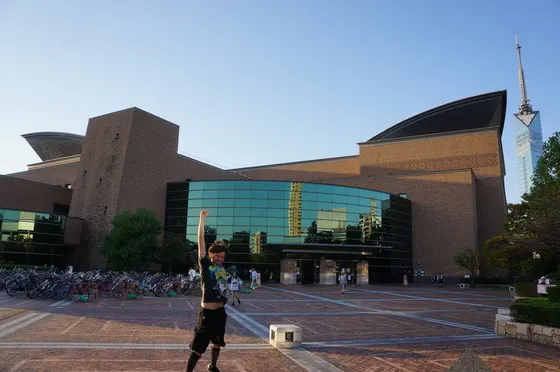
Hidden on the hill behind the shrine and reached by a long, futuristic escalator tunnel, this huge wave-shaped glass building looks like a space station. It is Japan's fourth national museum, focusing on Japan's cultural exchange with the rest of Asia. The permanent exhibition costs ¥700 (free for under-18s); special exhibitions cost extra. Kids (and adults) will enjoy the hands-on area.
4. Komyozenji Temple
This small Zen temple near the shrine is famous for its two rock gardens, one representing islands in the sea, the other forming the Chinese character for "light". When we visited, it was one of the most peaceful places in Dazaifu. Note: it has been closed to general visitors in recent years, so check with the Dazaifu tourist information before you go.
5. Kanzeonji Temple and Japan's oldest bell
A 15-minute walk west of the shrine, Kanzeonji is a quiet temple founded in the 8th century, with a bell said to be the oldest in Japan. Its treasure hall displays large wooden Buddhist statues.
6. Dazaifu Government Office Ruins
The foundations of the ancient administrative capital of Kyushu, now a grassy park with stone bases scattered across the lawn, a little like a miniature Stonehenge. A lovely place for a walk at the end of the day; Tofuromae Station is nearby for your train back.
Getting there from Fukuoka
- Train: Nishitetsu Tenjin Omuta Line from Nishitetsu Fukuoka (Tenjin) to Nishitetsu Futsukaichi, then change to the Dazaifu Line. About 26 minutes, ¥480 one way. Some weekend trains run direct.
- Bus: the Tabito liner runs directly from Hakata Bus Terminal and Fukuoka Airport (about 40–45 minutes).
Tips
- Go early or on a weekday; school groups and tour buses arrive mid-morning.
- February–March for plum blossoms, November for autumn leaves.
- Combine with a relaxed evening back in Fukuoka at the yatai stalls: see things to do in Fukuoka.
Sources checked: Watabi – Dazaifu Tenmangu guide (rates updated October 2026).
About the authors
Dasza — Writer and photographer behind PTraveler. Polish-born, raised in Germany, happiest renting a flat in a new city for a month.
Tomek — Project manager, fixer and tour leader. Plans the routes, finds the free days and tests every street-food stall.